Street Markets
Sadar Bazaar
Old Gurgaon's chaotic wholesale market for spices, brass, fabric and everything else the malls do not sell.
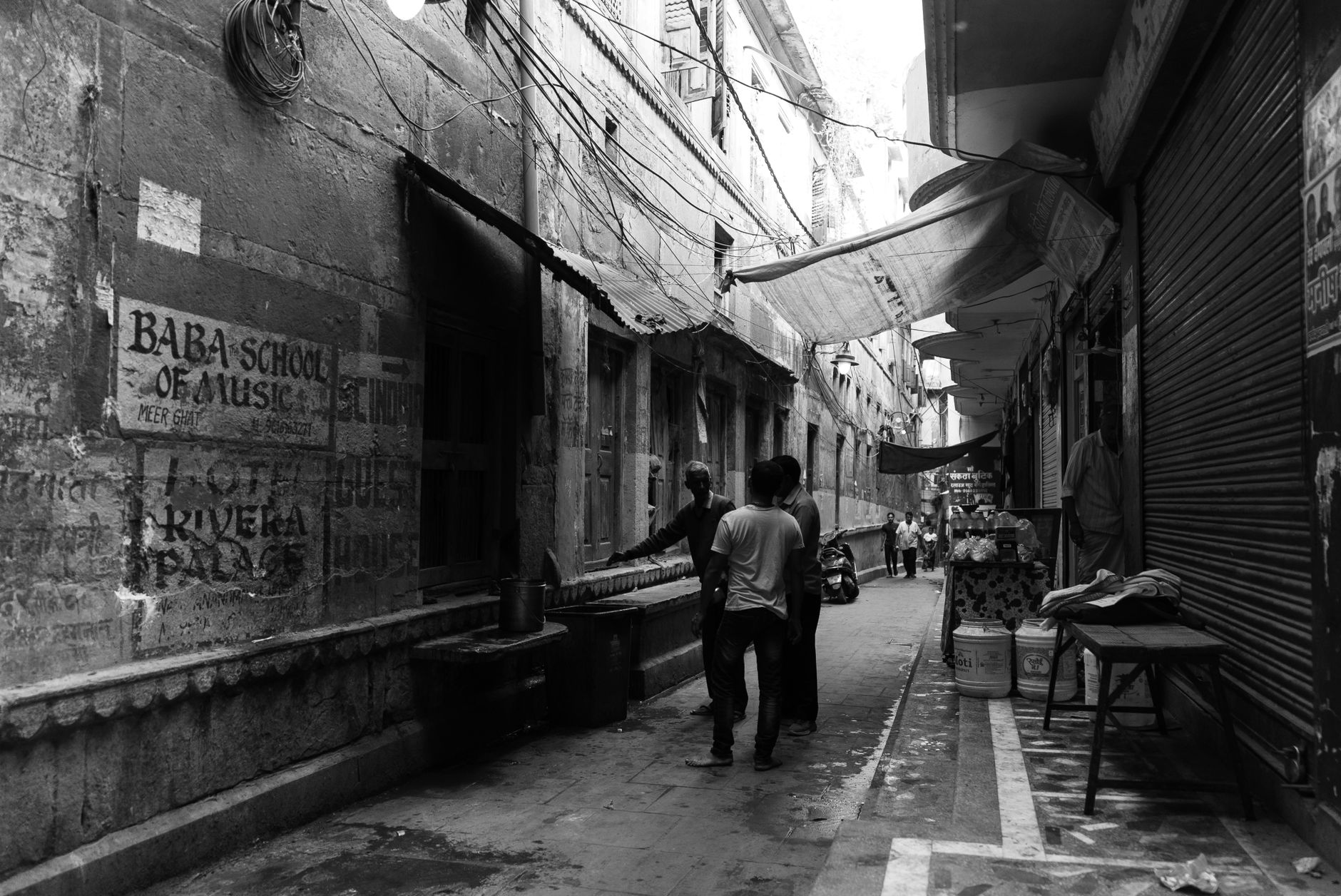
Sadar Bazaar is the original commercial heart of Gurgaon town, predating the corporate city by a century. Three narrow interlocking lanes off the old railway station road hold a market that supplies not just Old Gurugram households but the smaller shops of the newer sectors. Spices sold by the kilo, brass and steel utensils, saris in wholesale bundles, fresh vegetables, sweets, hardware, phone accessories — the market covers ground the malls do not touch. The name is literal: sadar bazaar means the main market, and for most of the twentieth century this was where Gurgaon shopped, banked, ate and got its bicycle fixed. The glass city grew up four kilometres east along Golf Course Road and simply left the old town alone. Come here for the things the sectors stopped stocking — loose spice, unbranded cloth, hardware sold by the single piece — and do not come expecting brands, air conditioning or a shopping experience with a floor plan.
Enter from the Sadar Bazaar clock tower end and walk south. The first lane is textiles — cotton, block-print fabric, embroidered cushion covers. The second is kitchen and household goods, worth browsing for brass diyas and hand-hammered kadhais. The third is food: three parallel spice shops sell garam masala mixes ground to order, and a handful of sweet shops (Bansal's, Aggarwal's) do jalebi and imarti from 8am. The Kesar Da Dhaba stall serves the best chana bhatura in the market for ₹80. Buy the spice last — a kilo of freshly ground garam masala will perfume the fabric you bought twenty minutes earlier. If you want a blend ground while you wait, place the order before 11:00: it is a ten-minute job on a quiet morning and closer to forty once the grinder has a queue behind it.
Come weekday mornings 10-12 for the calmest browsing. Weekends the market is dense and slow. Cash is preferred; some spice shops take UPI but nothing else. Bring a bag — plastic is scarce and shopkeepers charge extra. The market is not a tourist destination, so prices are honest and the experience is genuinely local. It is a good complement to a Sheetla Mata temple visit as both sit in Old Gurugram, five minutes apart by auto. Shopkeepers work in Hindi and Haryanvi first, and a few words of Hindi will get you further than any map or app here. Photograph shopfronts rather than faces unless you ask; a nod at the counter is usually all it takes, and it is the difference between being tolerated and being welcomed back to the same stall.
Getting here is the part people overcomplicate. The nearest metro is MG Road on the Yellow Line: exit on the Sikanderpur side, take an auto west along Old Delhi Road and Railway Road, and you are at the clock tower in about 15 minutes for roughly ₹100 on the meter or an app. Millennium City Centre, the old Huda City Centre terminus, works too — about 7 km, ₹120-₹150 and 20 minutes in traffic. Shared autos run the Railway Road corridor for ₹20-₹30 a seat if you are happy to squeeze. From Cyber Hub or Udyog Vihar allow 25-35 minutes and ₹250-₹300 in a cab. Gurgaon Railway Station is barely 1.5 km away, a 15-minute walk or a ₹40 auto hop. Do not drive: there is no proper car park, the lanes are motorcycle-width, and you will spend longer parking than shopping.
The market itself costs nothing. There is no gate, no ticket, no guide fee and nobody selling you a heritage walk at the entrance. What you spend is entirely on goods: budget ₹500-₹1,500 for a decent haul of spice and cloth, more if the brass tempts you. Chana bhatura at Kesar Da Dhaba is ₹80, jalebi and imarti are sold by weight at the sweet shops, and a chai at any of the corner stalls is ₹15-₹20. Bring the money in ₹100 and ₹50 notes — nobody wants to break a ₹2,000 note at 10:30 in the morning, and change is a genuine friction point. Withdraw cash near MG Road metro before you set off rather than hunting an ATM in the lanes. Haggling of 10-20 percent is normal on utensils and fabric; on food sold by weight it is not, so do not try.
Timing decides whether this is a pleasure or an ordeal. The sweet shops fire up around 8:00, the rest of the shutters go up between 10:00 and 10:30, and 10:00-12:00 is the window worth planning around — wide lanes, unhurried shopkeepers, first-sale goodwill. There is a slack hour or two after 14:00 when some owners half-shut and eat lunch. From 17:00 the market fills properly and by 19:00 the textile lane is shoulder to shoulder until closing around 21:00. Seasonally, October to March is the time to come; the fortnight before Diwali and the wedding weeks from November to February are the market at its most alive and its most impossible, with no room to bargain because everything sells anyway. April to June regularly hits 42-45°C in lanes with no shade, and monsoon afternoons in July and August leave standing water and mud underfoot. Go in winter, go before noon.
This suits confident walkers, cooks, anyone furnishing a flat, and travellers who want an hour of real Gurugram rather than a curated version of it. It does not suit wheelchairs or strollers: the lanes are uneven, there are open drains at the edges, and motorbikes push through gaps you would not think existed. Small children are better carried than walked. Teenagers usually last exactly as long as the food lane holds their attention, so lead with jalebi rather than utensils. On a rainy afternoon skip it entirely — the lanes puddle badly and the covered alternative in Sector 29 or at a mall is a better use of the hours. If you have a one-hour gap before a train from Gurgaon Railway Station, it works beautifully: 20 minutes for spice, 10 for a plate of chana bhatura, and a ₹40 auto back to the platform.
Fold the visit into a half-day around Old Gurugram. Sheetla Mata Mandir is about 2 km away, an 8-10 minute auto for ₹60-₹80, and is at its most interesting on a weekday morning rather than during the Chaitra mela in March-April, when the queue swallows the whole neighbourhood. Gurgaon Railway Station and the old bus stand on Old Delhi Road are both a short walk if you want to see how the town moved before the expressway existed. Eastwards, Leisure Valley Park and the restaurant strip in Sector 29 are 7 km and 20 minutes for a completely different Gurugram over lunch. If you are up early and have a car for the day, Sultanpur National Park sits roughly 20 km west and rewards a 7:00 start far more than a midday one; the heritage town of Farrukhnagar, with its baoli and Sheesh Mahal, lies beyond it, about 40 minutes from Gurugram.
The honest caveats. This is not Chandni Chowk and comparisons set you up for disappointment — there are no havelis, no Mughal gateways and no photogenic decay, just three working lanes you can walk end to end in 40 minutes if you buy nothing. The clock tower is modest and does not need a photo stop. Wholesale pricing means wholesale quantities; buying one metre of fabric or 100 grams of masala gets you retail rates like anywhere else. The brass is new stock, sometimes darkened to look older, so anyone hunting antiques is in the wrong market. There are no public toilets you would willingly use, no English signage and no tourist information. And nobody here is trying to guide you, which is the best thing about the place: the absence of touts is exactly why the prices stay honest.
Hours & entry
Free entry all day
Mon-Sat 10:00-21:00 · Sun partial
What to see
{'what': 'Ground-to-order garam masala at Sri Ram Spice', 'where': 'Third lane, middle section'}
{'what': "Bansal's jalebi shop", 'where': 'Corner of the second and third lanes'}
{'what': 'Brass diyas at Radhey Utensil Store', 'where': 'Second lane, north end near the clock tower'}
Tips from the ground
Weekday mornings before noon are the calmest.
Carry cash — cards are not accepted anywhere and UPI is patchy.
Combine with a Sheetla Mata temple visit — both in Old Gurugram, 10 minutes apart.
Good to know
Questions, answered
Is there an entry fee?
No, the market is a public bazaar — free to enter and browse. There is no gate, no ticket window and no guide charge, and nobody at the clock tower end is selling you access to anything. Your only costs are what you buy and how you got here: roughly ₹100 by auto from MG Road metro, ₹80 for chana bhatura at Kesar Da Dhaba, and ₹500-₹1,500 for a decent haul of spice and cloth. Paid food walks exist in Gurugram and cost several times what the food itself does; this market is simple enough to do alone.
When are prices best?
Weekday mornings, when shopkeepers are opening up and cheerful about a first sale. Between 10:00 and 12:00 you get room to look and a genuine willingness to shave 10-20 percent off utensils, brass and fabric. Food sold by weight — jalebi, imarti, ground masala — is fixed, so do not push there. The worst weeks are the fortnight before Diwali and the wedding stretch from November to February, when the textile lane sells everything regardless and nobody negotiates. Carry ₹100 and ₹50 notes; change is genuinely scarce early in the day.
How much time do I need?
Two hours to walk all three lanes and buy a few things. A brisk end-to-end walk with no shopping takes about 40 minutes; add 20-30 minutes if you stop for chana bhatura and jalebi, and up to another 30 waiting on garam masala ground to order, which is why you should place that order before 11:00. Adding Sheetla Mata Mandir, 8-10 minutes away by auto for around ₹80, turns it into a comfortable half-morning. Anyone with only an hour before a train from Gurgaon Railway Station can still do a worthwhile spice run.
Any closed days?
Most shops shut Sundays or open half-day; Monday to Saturday is safest. Shutters generally go up between 10:00 and 10:30, with the sweet shops trading from about 8:00, and the market runs to roughly 21:00. Expect a slack patch after 14:00 when some owners half-close for lunch, so a mid-afternoon arrival can feel oddly dead. Individual shops take their own weekly off, and the lanes largely empty on Diwali and Holi. In April and May the heat, not the calendar, is the real closer — the lanes are unshaded and regularly touch 42°C.
Do I need to book anything?
No — walk in and haggle. There is nothing to reserve, no timed entry and no tour worth paying for; the whole market is three lanes and you cannot get meaningfully lost. What you should bring is cash in small notes, a cloth or jute bag because plastic is scarce and charged for, and a little Hindi. If you want a masala blend ground while you wait, arrive before noon so the grinder is free. For anything bulky in brass or steel, agree the price before it is wrapped.
Nearest metro?
MG Road on the Yellow Line, then a 15-minute auto (₹100) to Old Gurugram. Millennium City Centre, formerly Huda City Centre, works equally well — about 7 km, ₹120-₹150 and 20 minutes depending on traffic on Old Delhi Road. Shared autos along the Railway Road corridor cost ₹20-₹30 a seat if you do not mind squeezing in. Gurgaon Railway Station is only about 1.5 km away, a 15-minute walk or a ₹40 hop. Do not drive here: there is no usable car park and the lanes are barely wider than a motorcycle.
Doing good is the business: every booking through Stay Gurugram funds one verified tonne of carbon removal — same room, same price, no markup.
Start your search